
Signs Your Electrical Panel Needs an Upgrade
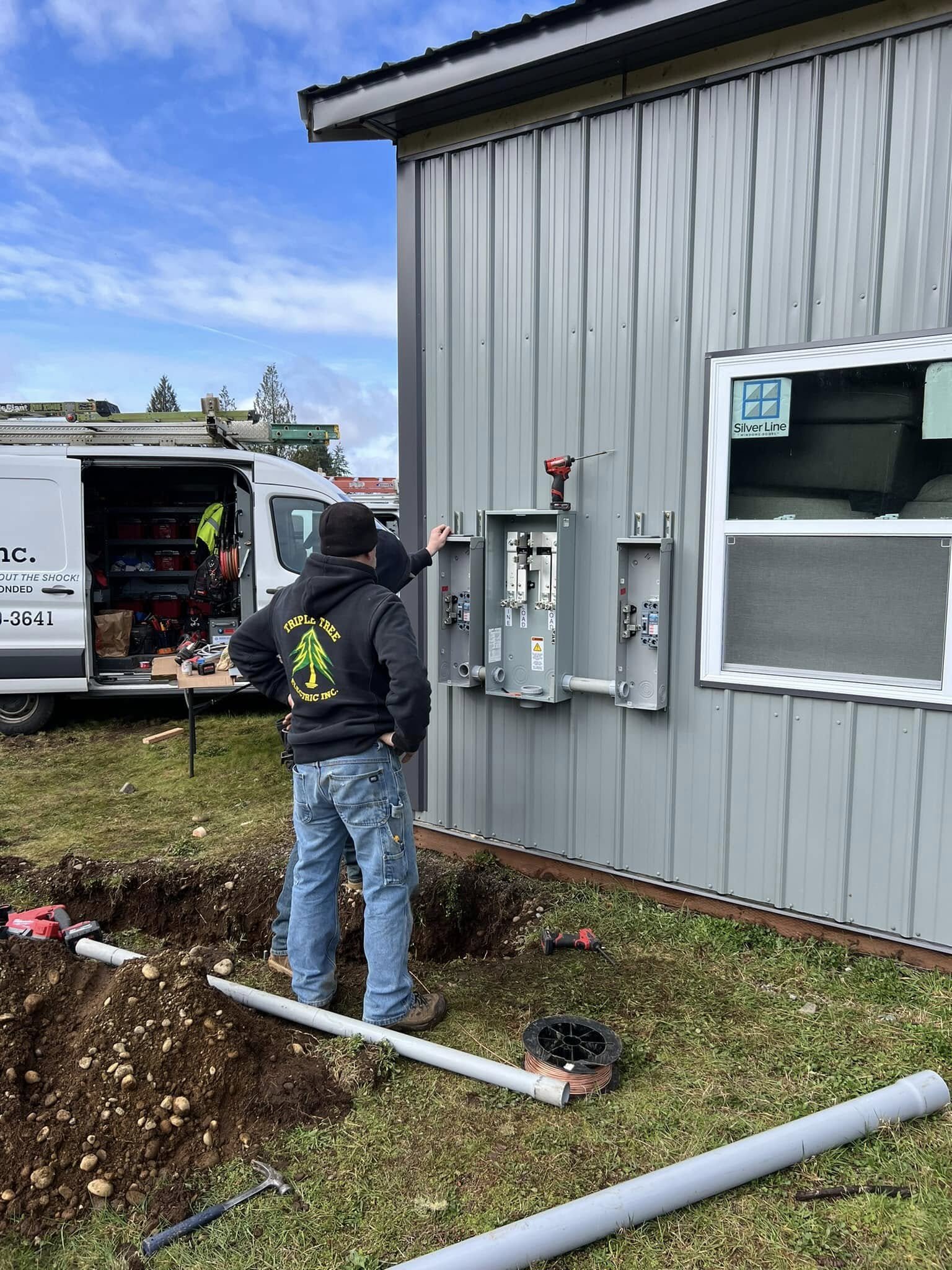
Your electrical panel is the distribution hub for everything in your house. Every circuit, every outlet, every appliance runs through it. When it can't keep up, you'll notice — and sometimes what you notice is a safety issue, not just an inconvenience.
Here's how to know when it's time.
Your Breakers Trip Regularly
A breaker tripping once in a while is normal — it's doing its job. A breaker tripping every time you run the microwave and the hair dryer at the same time means that circuit is overloaded. If multiple breakers trip regularly, the panel itself may be undersized for your home's electrical demand.
This is common in homes that were wired for a different era. A 100-amp panel installed in 1975 was sized for the appliances and habits of 1975. Add a modern kitchen, a home office, a heat pump, an EV charger, and a shop — and that panel is out of capacity.
You Still Have a Fuse Box
Fuse boxes were standard in homes built before the 1960s. They work, but they have limitations:
- Each fuse is one-time use — when it blows, you replace it
- Homeowners sometimes install the wrong size fuse (a 30-amp fuse on a 15-amp circuit) which defeats the purpose of overcurrent protection
- Insurance companies increasingly require fuse box replacement for coverage
- Fuse boxes typically provide 60-100 amps of service, which is not enough for modern homes
If your home still has a fuse box, upgrading to a breaker panel is the single biggest safety and capacity improvement you can make to your electrical system.
You're Adding Major Equipment
These all require significant electrical capacity:
- **EV charger:** 40-60 amp dedicated circuit (charger draws 30-48 amps, circuit sized larger per code)
- **Standby generator:** Requires a transfer switch and adequate panel capacity
- **Heat pump or mini-split system:** Dedicated high-amp circuit
- **Hot tub:** 40-60 amp dedicated circuit
- **Shop tools (welder, compressor, table saw):** 240V circuits, often 30-50 amps each
- **Electric range or oven:** 40-50 amp dedicated circuit
If your panel doesn't have room for the breaker, or doesn't have enough total amperage, you need an upgrade before the new equipment goes in.
Your Panel is a Known Problem Brand
Some panels manufactured in specific eras have known safety issues:
- **Federal Pacific (FPE) Stab-Lok panels** — Breakers have a documented failure rate. They don't trip when they should, which means overcurrent events go unprotected. If you have an FPE panel, replace it.
- **Zinsco/GTE-Sylvania panels** — Similar issues. Breakers can melt to the bus bar and fail to trip.
These panels were installed in millions of homes from the 1950s through the 1980s. If your home was built in that era and has the original panel, check the brand name on the panel door.
Your Home is 40+ Years Old and Has the Original Panel
Even without a specific safety concern, a panel that's been in service for 40-50 years has aging components. Bus bars corrode. Wire connections loosen over time. Breakers wear out from thermal cycling. A panel that was fine 30 years ago may not be fine today — especially under increased load.
What an Upgrade Involves
A panel upgrade typically includes:
- Removing the old panel and breakers
- Installing a new 200-amp panel (the current standard for residential)
- Re-terminating all existing circuits
- Upgrading the meter base if required by the utility
- Pulling an electrical permit and scheduling inspection
The work usually takes one day. Power is off for several hours during the swap.
What It Might Costs
Residential panel upgrades typically run $1,500–$3,500 depending on the scope (As of 2026):
- 100-amp to 200-amp panel swap (straightforward): $1,500–$2,500
- Fuse box to breaker panel conversion: $2,000–$3,000
- Panel upgrade with meter base replacement: $2,500–$3,500
If additional work is needed (rewiring circuits, adding a sub-panel, utility coordination), costs increase. You'll know the full scope from the estimate.
Triple Tree Electric does panel upgrades across Grays Harbor, Thurston, and Mason Counties. If your panel is holding you back or putting you at risk, we'll assess it and give you a straight answer.